Michael Theodorou
  • Home
  • Update February 2012
Picture

MICHAEL THEODOROU,  AUTHOR
Contact e mail: miketheodorou@hotmail.co.uk 

 BIOGRAPHICAL DETAILS
******************************************************
 
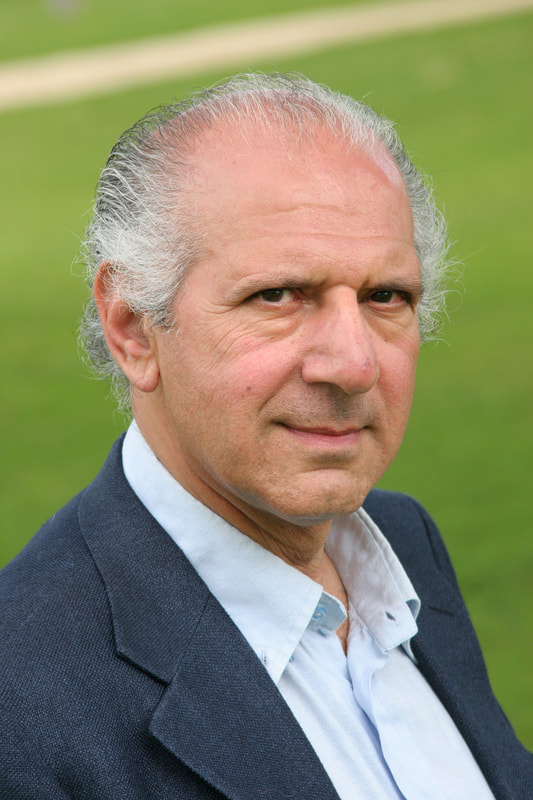
Michael is an author, director, playwright and teacher of many  years experience in the performing arts .

He was educated at Haverstock School in North London and subsequently went on to Hull University where he did a Joint Honours degree in French and Spanish.

 As ‘Michael Chesden’ he worked as an actor in theatre, television and films from 1973 to 1989. 

 He appeared in a varied selection of television programmes including leading roles in ‘Play for Today’, ‘Star Cops’, ‘Suez’, ‘Dark Side of the Sun’, ‘Confessional’ and ‘Bergerac’. 


He also appeared as a guest artist in a number of popular comedy series including ‘Pig in the Middle’, ‘Duty Free’ and ‘Whoops Apocalypse’.

His films include ‘Green Ice’, ‘The First Olympics’ and ‘Eleni’.

 
In 1989 he joined the staff of Wells Cathedral School as Head of Drama and wrote and directed many productions which were taken to the Edinburgh Festival Fringe.

 In 2003 he joined Cokethorpe School in Oxfordshire as Head of Drama and continued writing plays - all of which have been subsequently published.

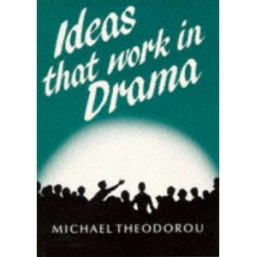
 His book on the teaching of drama in Secondary Schools 'Ideas that Work in Drama was published by Nelson Thornes in 1990 and has become a popular and influential work.


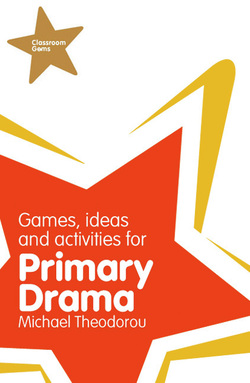
He was recently commissioned by Pearson to
write a book for Primary Schools called 'Ideas, Games and Activities for Primary Drama'.


 Five of his schools’ drama scripts have been published  and are performed regularly up and down the country by schools, youth groups and amateur theatre companies.

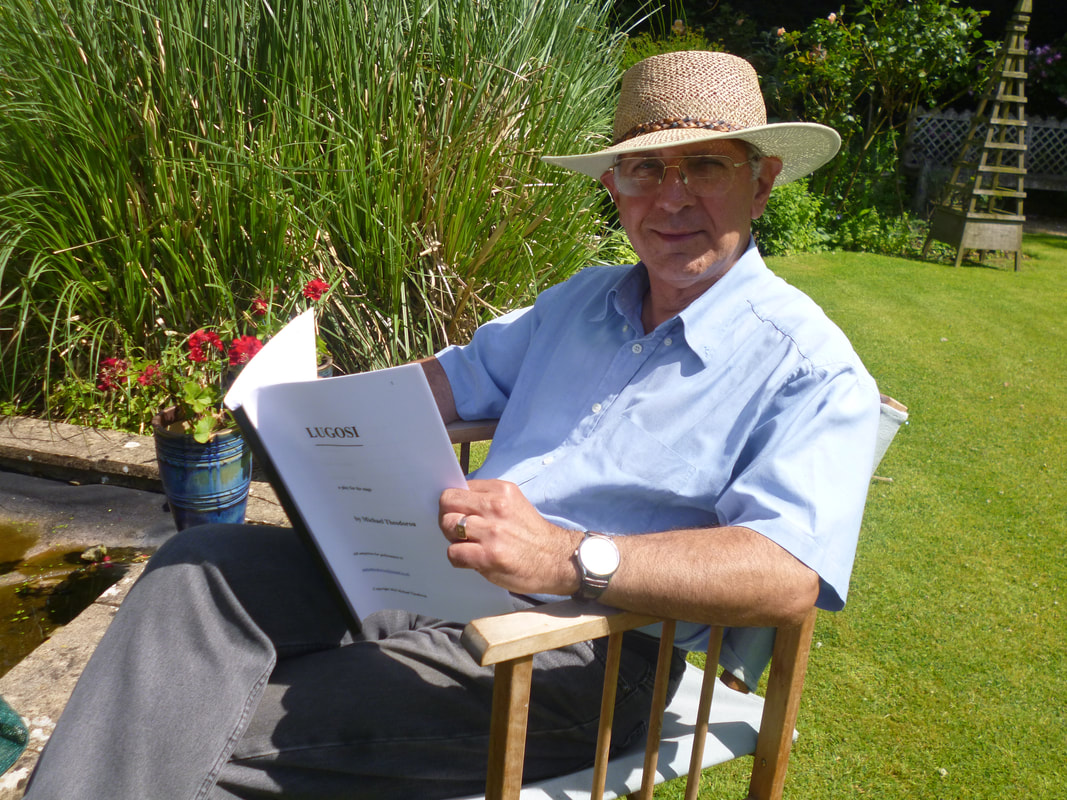
 Michael’s latest works include a stage play about the Hungarian actor BELA LUGOSI and another play about the Spanish poet, FEDERICO GARCIA LORCA, who was so tragically killed during the Spanish Civil War of 1936.  


EDUCATIONAL BOOKS
***********************

IDEAS THAT WORK IN
 DRAMA

This is essentially a practical book of ideas for work with Secondary School classes aged 11 - 18 and is aimed at the hard pressed drama teacher who is constantly having to think up ideas to stimulate students.
Ideas in this book are presented with a particular age group in mind though, quite often, an idea can be adapted to suit pupils of most ages.

I have divided the book into four sections:

WORKING IN LARGE GROUPS
WORKING IN SMALL GROUPS
TEXT STIMULI
VISUAL STIMULI

The first section contains a lot of suggestions for movement such as starting from a simple gesture, moving statues,crowd work, gibberish sounds, double glazed window and rotation improvisation.

In Section Two we move towards working in smaller groups where concentration and self-sufficency become important elements. Activities such as objects coming to life, family groups, decision-taking and loop dialogues stimulate the students' creativity even further.

Text work forms the body of Section Three and contains extracts from poems and plays which serve as the basis for groups to devise and create their own polished performances.

The last section has pictures as the starting point for work and challenges their ability to use their visual imaginations.

This is the kind of book I wanted to read some twenty years ago when I first started teaching when there were lots of theoretical books around which told you 'why' drama was important but never told you 'what' ideas might interest young people.

There is no need to slavishly follow every single page. I suggest that teachers 'dip into the book' and find ideas that they like which would be suitable for their particular situation.

'This is THE best hands-on drama book I have ever used. It's creative and yet it helps you to format your own ideas. Any classes that I've done with children ( of any age) have always been a resounding success'. www.amazon.co.uk 


GAMES, IDEAS AND ACTIVITIES FOR
PRIMARY DRAMA


This is a book of practical ideas essentially for Primary School pupils aged 5-11 but also suitable for Years 7 and 8 in Secondary Schools.

The book aims to extend physical, vocal and performance skills in Drama and English lessons.

Practical activities the main body of the page in a 'what to do section' where teachers will be able to 'lift' ideas that are appropriate.

The language used is simple and direct in order to provide the busy teacher with instant, 'off the shelf' ideas for starting and developing drama sessions.

The book is divided into three parts:

MOVEMENT
VOICE
CHARACTER

There are hundreds of suggestions for solo, pair and group work as well as opportunities for movement to music.

Activities on voice focus on solo speech, duologue work, the use of accents and dialects and how to project the voice.

The 'characters activities' are for exploring characterisation, learning peformance skills and consolidating everything that has been learnt in Parts 1 and 2.

Additionally there are dramatised extrcats written by the author, available online, that can be used as scripts.

The scripts include:

Oliver Twist
Great Expectations
A Christmas Carol
The Cuckoo Clock
The Secret Garden
A Midsummer Night's Dream
Goodbye, Mr Chips.

You can find these extracts on the companion website www.pearson.co.uk/theodorou

Picture
Published by Stanley Thornes
Picture
Published by Pearson Education


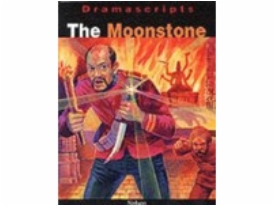
THE MOONSTONE adapted for the stage
from the novel by
Wilkie Collins


Picture
published by Nelson Thornes
 Skilfully adapted as a clear and fast moving narrative from the brilliant Victorian detective story by Wilkie Collins this version retains all the mystery and excitement of the original.

Led by the eccentric Sergeant Cuff the story focuses on the essential question of 'who stole the Moonstone'? A whole host of characters from the aristocratic Lady Verinder to the stolid manservant, Betteridge, are brought under suspicion.

There are thirty five speaking parts but this could be considerably reduced in a stage production to a manageable size.

There is a lot of underlying humour in the text which should add a lightness of touch to any production.

As a reader for the English classroom this classic play would make a valuable addition to any department's stock and would also be useful to students who are learning English as a foreign language.


   TRANSLATIONS
   ****************


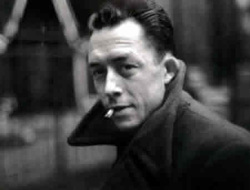
CALIGULA
 by Albert Camus
translated from French
into English

This translation of Camus' play from 1944    is a searing study of the Roman Emperor, Caligula.

It captures all the drama and violence of the original French with great roles for male and female actors.

This neglected masterpiece will always be a candidate for revival in the theatre.

There are 12 male and 8 female roles and lasts about 2hours 15 mins with an interval.

For scripts contact miketheodorou@hotmail.co.uk
Picture
Picture

DONA ROSITA by
Federico Garcia Lorca 

Translated from the Spanish, Lorca's bitter-sweet masterpiece of frustrated love is set in turn of the century Andalusia where Rosita is left behind by her fiance when he emigrates to South America.

She remains faithful to him for 15 years but he never returns and she never marries.

A strong comedy element underlines the sadness of the theme reflecting Lorca's unique use of poetic imagery and language.

There are superb female roles.

12 female and 7 males roles form the cast and the playing time is two hours with an interval.

For scripts contact miketheodorou@hotmail.co.uk
Picture
Picture


Picture
Federico Garcia Lorca
Picture
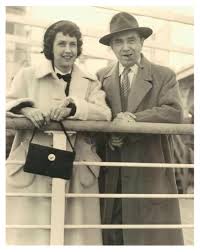
Bela and Lillian Lugosi
Picture
The Turn of the Screw
Picture

PLAYS BY MICHAEL
THEODOROU

STARETZ
a new play 
A stage play set during the period of the Russian Revolution 1917/18.
Four real life characters who lived through the events - two women and two men - give us their version of the cataclysmic events that engulfed the world and changed the face of Russia for ever.
Through narrative, letters, monologues, confessions and cross examinations each character reveals their link to the 'Staretz' of the title. The infamous Rasputin becomes the catalyst through whom events are played out though he never appears in the play.
Steeped in the musical traditions of Russian Orthodox music and chanting the play is easy to stage and lasts about an hour.

Enquiries regarding performance to miketheodorou@hotmail.co.uk


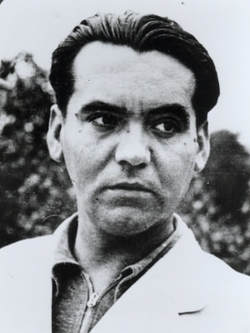
LORCA

The play is based on the life of the famous Spanish poet. It is set in 1936, the date of Lorca’s death, and 1978, the year of the death of the man who denounced him and subsequently had him arrested.
Lorca was shot by firing squad just outside Granada on August 19th 1936.
Much has been written about Lorca’s death and much remains hidden with a mixture of truth and lies. Even today Spain is still coming to terms with his death.

There are only two characters in the play – LORCA himself and ‘THE INTERROGATOR’. Both actors are required to multi role. 
The play takes place in a room in the civil government building in Granada. It is very simple to stage and lasts 60 minutes.

 
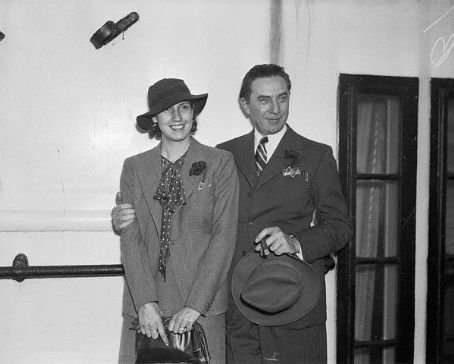
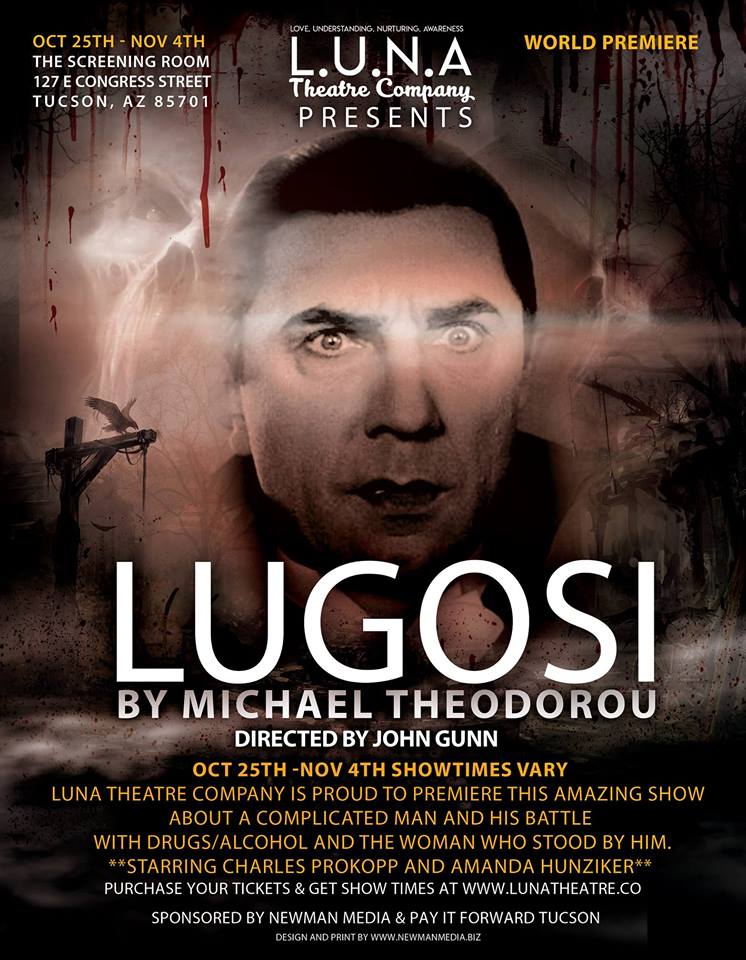
LUGOSI 

The play is based on the life of the great Hungarian actor, ‘Bela Lugosi’, the first actor to play the role of ‘Dracula’ on screen.

 The play is set in 1951 the year in which Bela was invited to do a stage tour of ‘Dracula’ in England.
Accompanied by his wife, Lillian, and with his Hollywood career on the wane they undergo all the pressures and hardships of the provincial touring circuit. 
Their plans to take the production into the West End flounder and the Lugosis have to return to the United States.Bela was 69 when he did the tour and Lillian was thirty years younger.

 The play looks back to his early successes in films as well as forwards to his tragic end.
Lillian plays a variety of roles but Bela is always himself.

The staging is simple. An open space is all that is required and the play lasts an hour.


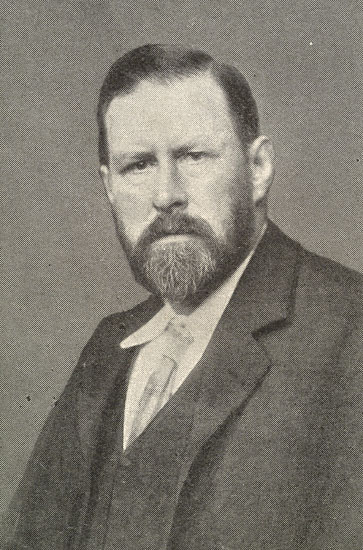
 DRACULA

 The play is set firmly in the Victorian period of the 1890’s and is a serious treatment of Bram Stoker’s theme. It should not be played as a ‘spoof’ but rather as an exercise in the sinister. The heightened language of the original translates into an exciting piece of blood curdling gothic horror but it need not tip over into melodrama.

 Moving swiftly from Transylvania to England and back again in a series of bold theatrical strokes the play will challenge any theatre company either amateur or professional. 

 Technical effects are important and an atmospheric use of music, sound and lighting will undoubtedly enhance the effect.
As an added bonus there is an opportunity to use a chorus of peasants who act as a Greek chorus and contribute to the atmosphere of the piece.
There can be as many as 33 in the cast or 12 with doubling. 
The play lasts approximately one and three quarter hours with an interval.

 ‘..genuinely disturbing moments..’ (OxfordUniversity Press)

‘…vividly portrayed….’ (Nelson)

Scripts are available from the author or www.dramaworks.co.uk 


LYSISTRATA

 An updated modern version of the comedy by Aristophanes.
Adapted and updated from the play by Aristophanes, this will always be a topical and relevant work because, somewhere in the world, wars exist which have a greater or lesser impact on us in the West.

This new version of the old classic is lively and funny, using modern language without fixing it to any particular period. It is not rooted in the jargon of a specific culture.
It would be simple to stage in whatever background context you desire – any country or any period – the options are wide.
It is loaded with sexual references/innuendoes and is utterly bawdy in the best sense of the word. The language is ripe and earthy capturing the full flavour of the original.

There can be as many as 30 characters, including choruses.
Playing time is one and half hours with an interval.


www.dramaworks.co.uk 


THE TURN OF THE SCREW
 co- authored with Patricia Theodorou

 
A stage play based on the original ghost story by Henry James.
A chilling new version of the classic ghost story in which the shades of two dead lovers wish to possess the lives of two innocent children.
This new version focuses on the disturbing psychological implications inherent in the character of the Governess.
An additional scene at the  end of the play provide a new twist and adds to the eerie atmosphere.

This is a spine tingling evening in the manner of ‘The Woman in Black’. 

The play is technically challenging and there is scope for an original sound and music score. It should be played without an interval.

 ‘…this version bears a haunting, fragile beauty and a strong sting in the tail….(Edinburgh Fringe)

 ‘….exquisitely captures the mood…’ (Scotsman)


'VIDEO  NASTY'


This is a one- off television script which could be developed and has been much admired by several television producers for its relevance to contemporary culture.

 Set in a multi- racial urban environment in the 1980’s, three aimless young teenagers drift into a life of violence and petty crime.

Their pastime is to watch videos of a sexual or violent nature while their parents are out enjoying themselves at pubs and clubs.

 We also see the boys at school where they are given little encouragement to develop. Both at school at home the examples set by adults give the boys little purpose in life and we can see very clearly the effects of neglect.

 The script makes no judgements on the characters and there is much comedy in the dialogue.

 Playing time approximately one hour

Characters: 13 males, 6 female

         ADAPTATIONS

Picture
A Christmas Carol
Picture
A Christmas Carol
Picture
The Cuckoo Clock
Picture
The Cuckoo Clock
               

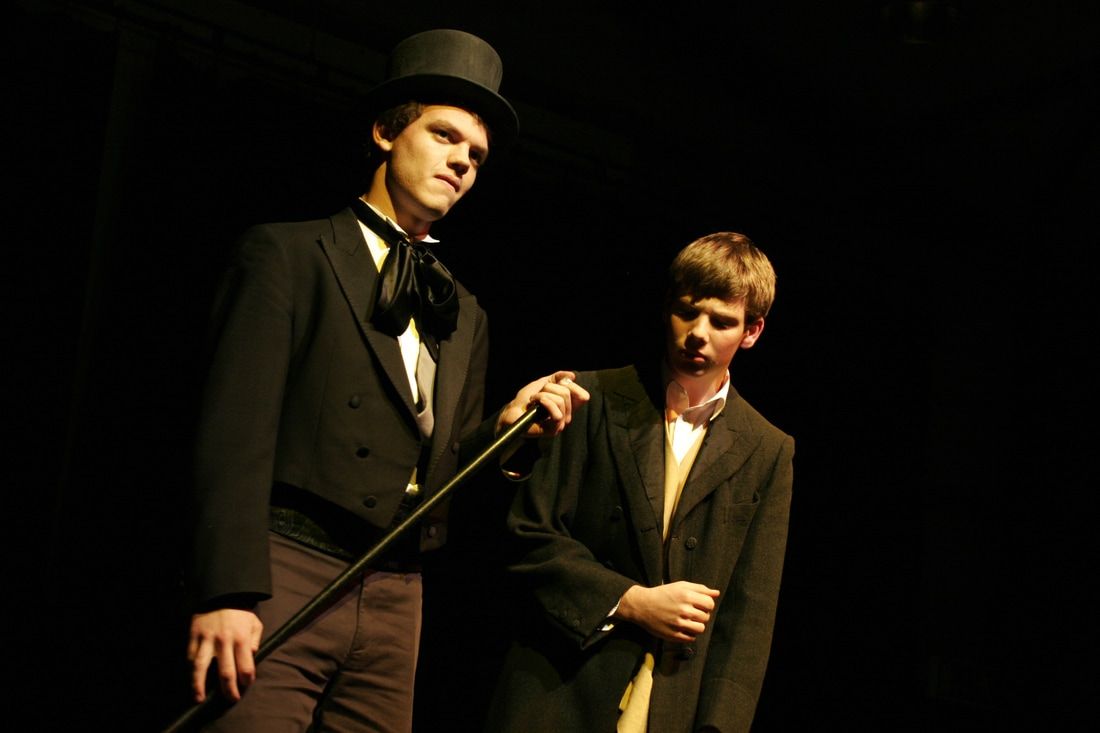
A CHRISTMAS  CAROL
adapted from the story by Charles Dickens

The play is a simply staged adaptation of the original well-known story.
This version traces Scrooge's personal journey to enlightenment in a particularly clear way.
Some of Dicken's own words are kept, especially in the speeches alloted to the two narrators, but the language all has a Dickensian feel to it. This serves to set the period and the atmosphere.
The simple style of the piece, which could be done without any scenery if desired, makes an ideal piece to present on it's own a part of a Christmas celebration.
The play lasts about forty five minutes - longer if full carols are included.
There are 33 roles which could be played by a mixed cast or an all female or all male production.

Scripts are available from the author or from  www.dramaworks.co.uk


THE CUCKOO CLOCK
adapted for the stage from the book by Mrs Molesworth

This delightful and welcome stage adaptation of Mrs Molesworth's  story captures the magical nature of the original with its Victorian charm and sentimentality.

The plot concerns a little girl, Griselda, who goes to live with her maiden aunts in the country and discovers that their mysterious cuckoo clock has a life of its own.

The flexible script can be played by as few as thirty children or as many as you like. There is an opportunity for teachers to take part in some of the adult roles.

This is a perfect Xmas entertainment for schools.

Contact www.dramaworks.co.uk for performance details.


JULIUS CAESAR

adapted from the play by William Shakespeare

This is an updated modern version of 'Julius Caesar' which should be played in modern dress.

Military uniforms are the uniforms of the modern military with modern weapons and machine guns in evidence.

In the war scenes 'sounds' should be the sounds of modern warfare, including bomb explosions, helicopters and jet aircraft.

Shakespeare's language has been updated but there are still some of the original speeches left intact to give the play its classical background.

The cast should be as large as resources permit, twenty or more if possible. The play can be performed by all male or all female or a mixture. Casting should be cross sex casting based on ability rather than gender.

'The Planets' by Gustav Holst is suggested by the author as a musical accompaniment.

Playing time is about an hour.

Enquiries for performance to miketheodorou@hotmail.co.uk


Picture

Create a free website with Weebly